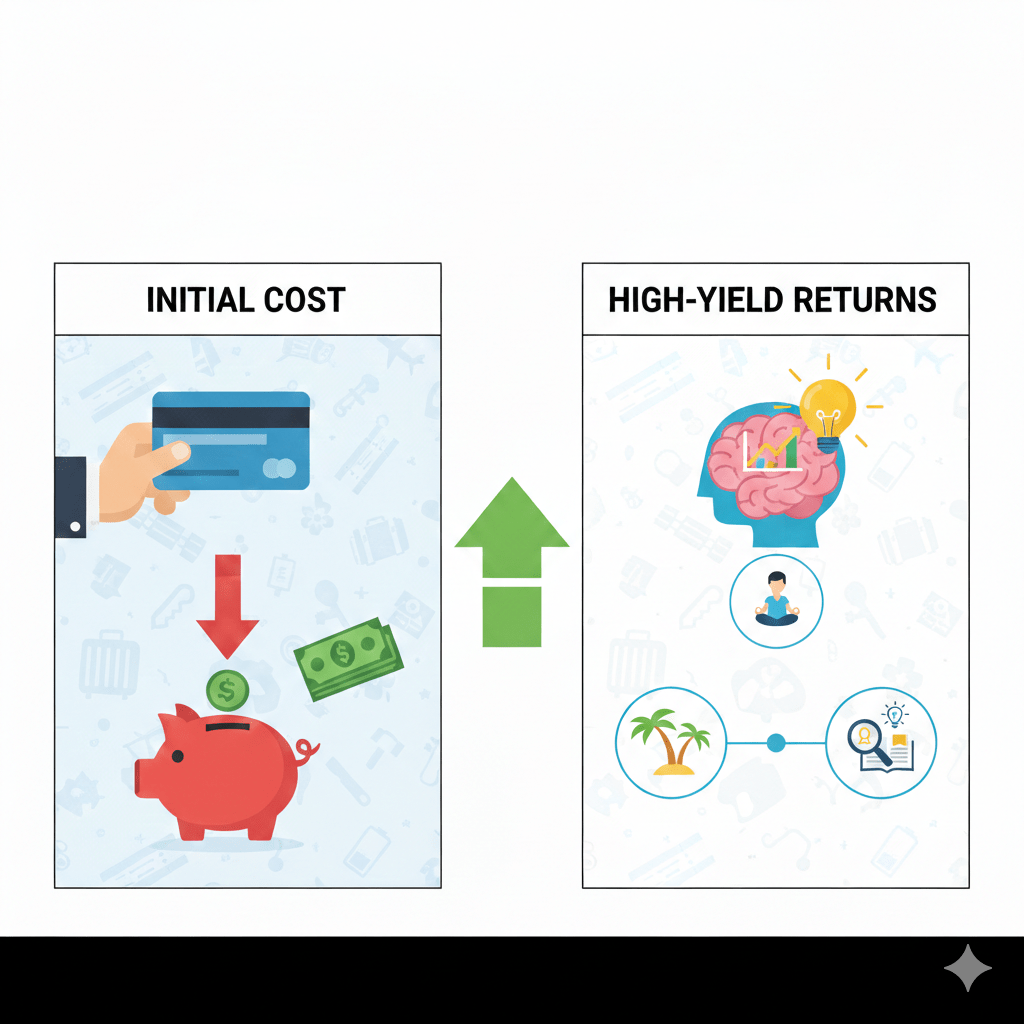
In the world of personal finance, we are taught to categorize everything as an “asset” or a “liability.” Most people place vacations firmly in the liability column—a pure drain on the bank account. But in the high-pressure economy of 2026, this perspective is not only outdated but financially dangerous.
1. The Productivity Dividend
Data shows that consistent “Doom-working” leads to diminishing returns. Your cognitive output drops, your decision-making gets sloppy, and you start making expensive mistakes in your business or portfolio. Strategic downtime acts as a mental ‘system reboot.’
2. Avoiding the “Burnout Tax”
Burnout is the most expensive tax you will ever pay. It costs you in medical bills, lost promotions, and poor investment choices driven by exhaustion. By allocating funds for travel, you are essentially buying longevity insurance for your career.
The Mathematics of Rest
- The Cost: ₹1,00,000 for a week in the mountains.
- The Gain: 20% increase in focus and creative problem-solving for the next 6 months.
- The Result: One “Big Win” at work or a smarter market entry can pay for the trip ten times over.
3. Perspective as a Portfolio Strategy
Stepping away from the screens stops the cycle of Financial Doomscrolling. It allows you to look at your life and wealth from 30,000 feet. Many of the world’s most successful investors credit their best “Big Picture” ideas to moments of quiet reflection far away from their office.
Rupee Decoded Verdict: How to Allocate?
- The 5% Rule: Allocate 5% of your annual income into a ‘Sanity Fund.’
- Experience over Ego: Spend on the quietude that recharges you, not the luxury that just looks good on Instagram.
- Zero Guilt: Remind yourself that every rupee spent on rest is a rupee invested in your future earning potential.
Your bank balance is a number, but your capacity to grow it is a direct reflection of your mental health. Stop ‘saving’ yourself into a burnout—start investing in your rest.